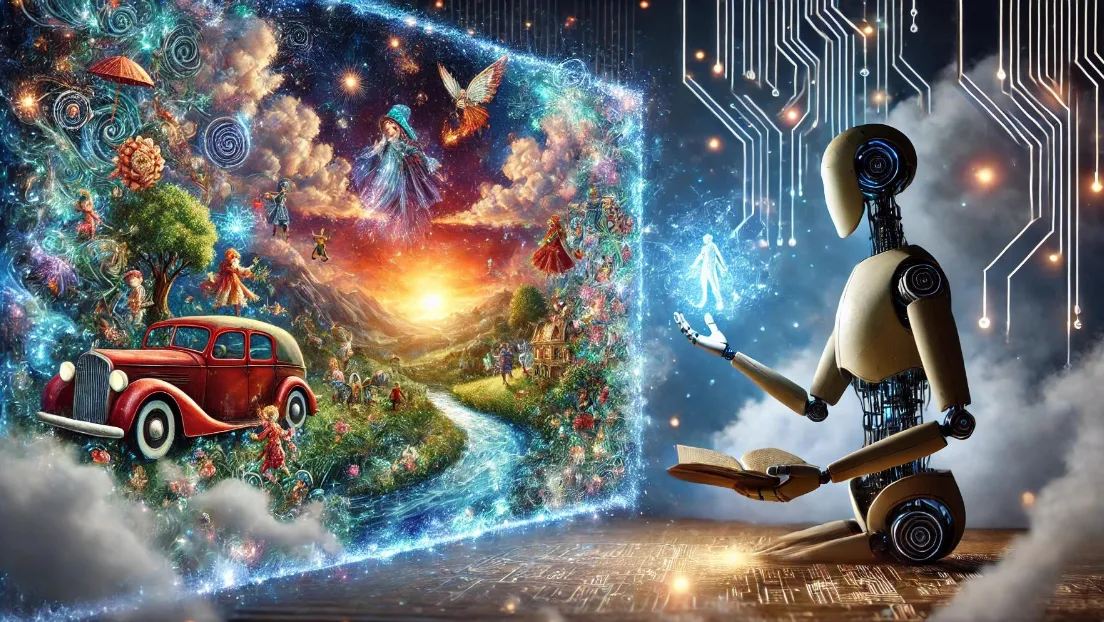
Picture a romance reader in 2030. She finishes a novel on her tablet and the book closes with a small prompt: “Would you like to read an epilogue customized to your favorite trope?” She taps yes. Within seconds, a 4,000-word continuation appears, written in the same voice as the original, exploring the side relationship that mattered most to her. This kind of experience is already being prototyped by major romance imprints using an AI fiction tool.
The future of love stories is going to look strange, beautiful, and occasionally unsettling. Every major shift in romance publishing has been driven by readers, and the current generation of readers is more comfortable with technology than any before them. A well-built AI story generator is no longer a novelty in their reading experience. It is a tool that is quietly reshaping what a romance novel can be.
This piece is a thoughtful look at where the genre is heading, what’s likely to last, and what writers might want to start thinking about now.
A Genre That Has Always Adapted
Romance fiction has been declared dead more times than almost any other genre. Each time, it has come back larger.
The Harlequin paperback era. The mass-market 1980s. The romance e-book boom. Indie publishing. Romantasy. Each wave reshuffled the industry and produced more readers.
The AI wave will be no different. It will reshuffle. It will produce more readers. The form will change, but the underlying need — the human desire to watch two people fall in love — will not.
Three Shifts Worth Watching
Looking out across the next five years, three shifts in romance storytelling look almost inevitable.
1. Personalization at the Reader Level
Books will increasingly meet readers where they are.
Not in the marketing sense, though that will continue. In the actual content. Trope emphasis adjusted to reader preference. Heat level dialed up or down at the reader’s discretion. Subplot prominence shifted based on what the reader has lingered on.
This raises uncomfortable questions about authorial control. Many of those questions will be worked out over the next few years. The direction is clear regardless.
2. The Rise of the Reading-Adjacent Experience
Romance has always extended past the page. Fanfiction. Reader meetups. Discord servers. The reading experience for many romance fans is already a social and creative one.
AI is going to deepen this dramatically. Reader-created continuations. AI-assisted fan art. Group reading experiences where readers debate and explore alternative paths through the story together.
The romance novel of 2030 will be the center of a much larger experience than the romance novel of 2020.
3. Faster Trend Cycles
Trends in romance already move fast. Romantasy went from niche to dominant in roughly eighteen months. New tropes catch fire and burn out in weeks.
AI tools are going to accelerate this further. The time from “readers are asking for X” to “the market is full of X” will compress to almost real time. Writers who learn to spot and respond to trends quickly will have an advantage. Writers who write only the books their hearts demand will still find their audience, just through different paths.
Specific Storytelling Techniques That Will Change
Beyond the broad shifts, certain craft techniques in romance are going to evolve significantly.
Multi-perspective storytelling. Romance has always favored dual POV. AI tools will make it feasible to explore three, four, or five POVs without losing reader engagement, opening up ensemble romance in new ways.
Branching story structures. Some romance novels will offer readers genuine choices about which storyline to follow. This will be uneven at first. The best examples will be remarkable.
Hyper-specific niching. Subgenres will get more and more specific. “Small-town romance” will give way to “small-town romance set in coastal Maine featuring a coffee shop owner and a returning marine biologist.” Discoverability tools will make these niches viable.
Adaptive pacing. Books will adjust their pacing slightly based on how the reader is engaging. Slower readers may get more reflective passages. Faster readers may get tighter scenes.
Not all of these will land for every reader. All of them are being prototyped right now.
What Won’t Change
It’s worth grounding all this in what will stay the same.
Readers will still want to feel something. They will still want the central couple to earn each other. They will still want the happy ending. They will still want the writer to take their time on the moments that matter most.
These are not features of any technology. They are features of being human.
Romance writers who keep this foundation in mind while experimenting with new tools will build careers that last. Writers who chase every trend without anchoring to the emotional core will struggle.
How Writers Can Start Preparing
A few specific practices will help romance writers stay ready for what’s coming:
- Read widely, including outside romance. The genre is going to absorb influence from interactive fiction, video games, and audio drama.
- Build a direct relationship with your readers. Newsletter lists, communities, and reader feedback channels will become more valuable as the industry fragments.
- Experiment with one new tool per quarter. Just one. Enough to stay current without losing focus.
- Invest in your craft fundamentals. As more books get produced more cheaply, the books that stand out will be the ones with the strongest underlying writing.
The writers who will thrive in 2030 are making these moves now.
A Hopeful Note About AI and Love Stories
A lot of the conversation about AI in fiction has a fearful edge. That’s understandable. The technology is moving fast, and it touches something we care about deeply.
It’s also worth saying: romance, of all genres, may benefit most from AI assistance.
Romance is the genre that takes love seriously. It celebrates intimacy, vulnerability, and connection in ways the rest of literature often does not. The more time AI gives romance authors to focus on those emotional truths, the better the genre gets.
The technology might be cold. The books will be warmer than ever.
A Few Predictions, Stated Cautiously
For the record, some specific things this writer expects to see by the end of the decade:
- A bestselling romance novel co-credited to an AI tool.
- Reader-customized epilogues as a standard feature in major romance e-book platforms.
- A new generation of romance authors who treat AI fluency as a basic craft skill.
- A counter-movement of romance authors deliberately rejecting all AI use, with their own dedicated reader base.
- A major literary prize finally awarded to a romance novel, partly because AI tools have raised the average quality of published work.
Predictions are humbling. Some of these will land. Some will look silly in three years. Worth saying anyway.
What the Reader of 2030 Will Expect
The reader who is fifteen years old today will be a romance reader in five years. Her expectations are already being shaped by experiences current writers don’t fully see.
She expects interactivity. She expects personalization. She expects to participate, not just to consume.
The writers who build careers in the next decade will be the ones who meet that reader where she actually is rather than where the genre was when they started writing.
A Few Practical Steps Writers Can Take This Quarter
If you’re a romance writer trying to position yourself well for the future, here are concrete steps you can take in the next ninety days:
- Audit your reader relationship. Do you have direct contact with your readers? If not, start building it.
- Try one new tool you’ve been resisting. Just one. Spend two weeks with it. Form your own opinion.
- Study an adjacent format. Read three interactive fiction works, listen to three audio dramas, or play three narrative-driven games. Note what they’re doing that romance could borrow.
- Talk to readers in your niche. Run a small survey. Ask what they’re tired of and what they wish they could find more of.
- Write one experimental piece. A short story with branching choices. A novella with multiple POVs. Something that stretches your craft.
None of these are heroic moves. Each one positions you slightly better for what’s coming.
The Bottom Line
The future of romance is going to be more varied, more personalized, faster-moving, and in some ways more intimate than the present.
It will also still be recognizable. The grand gesture. The dark moment. The kiss at the end. Those aren’t going anywhere.
Writers who treat AI as a way to deepen their work rather than replace it are the ones building the romance shelf of 2030.
For more thoughtful conversations about where storytelling is heading and how writers are navigating the change, backtofrontshow is worth adding to your regular listening. It’s the kind of further reading that helps a romance writer think about her own work in fresh ways, which is exactly the perspective the next five years are going to demand. y with branching choices. A novella with multiple POVs. Something that stretches your craft.
None of these are heroic moves. Each one positions you slightly better for what’s coming.

At RomanticPickups.com, Addison focuses on crafting clever, funny, and creative pickup lines, along with guides that explain trending internet phrases, texting slang, and romantic expressions used in modern conversations. Their writing blends lighthearted humor with practical advice, making it easy for readers to find the perfect line for any situation.